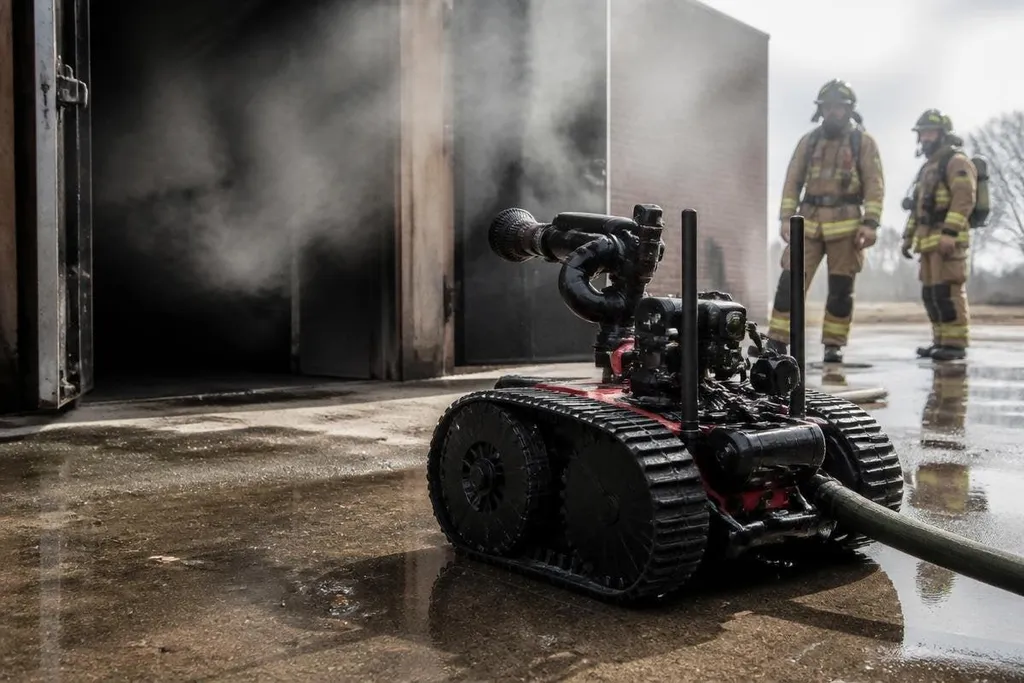
A firefighting robot has to do more than enter a hot building. It has to find people, send useful information, and keep working when smoke blocks cameras and radio signals weaken. The next step for these machines should be judged by field tasks, not by a clean video clip.
- Heat protection must work in a real rescue task, not sit alone on a specification sheet.
- Operators need clear video, sound, and robot status from a safe distance.
- A machine that cannot manage its hose, battery, or radio link has limited use at a fire.
The robot has to improve what crews see
Smoke removes much of the information that people normally use. A visible-light camera may show little, so thermal imaging may show heat patterns and possible people behind smoke. That image still needs context: the operator must know where the robot is, which way it faces, and whether it can move back out.
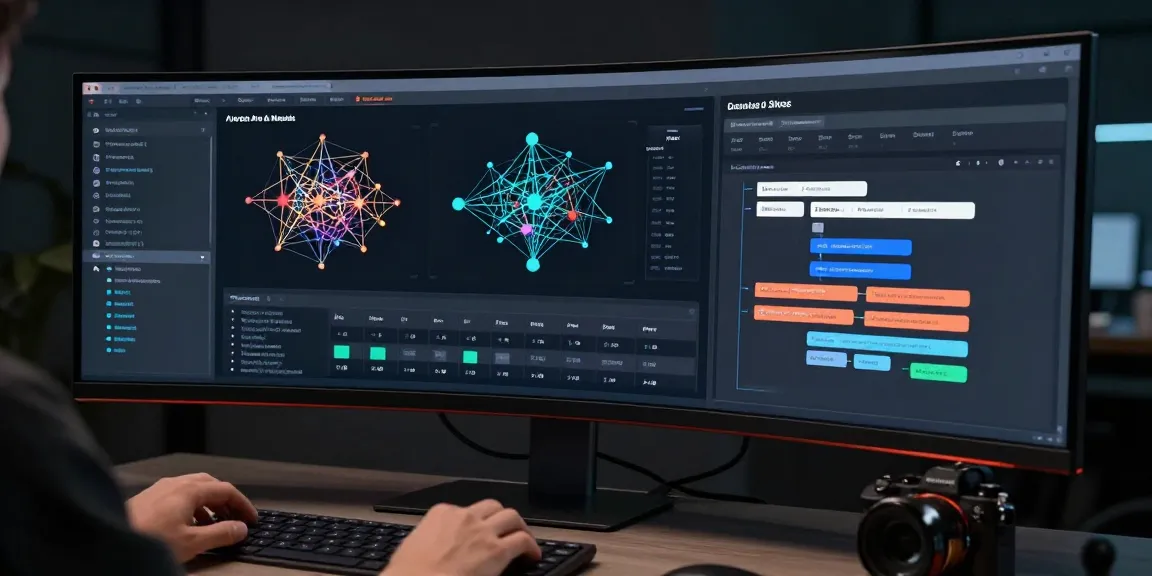
A useful system should combine video with a map, robot position, battery level, temperature, and link status. These details turn a remote machine from a moving camera into a tool a crew can use. The screen also matters. If warnings cover the image or controls take too many steps, the operator loses time while the robot sits inside the building.
A firefighting robot has to work where heat, smoke, and weak radio signals can change the plan in minutes. That makes named machines, test sites, control links, and failure cases useful evidence when you compare a field claim with what crews can use. Firefighting robotics coverage from Robot24.com can place those details beside the next test: whether the robot keeps working as the heat rises.
Heat is only one test
Surviving high heat doesn't prove the task will work. Tracks may lose grip on wet floors. A drive motor may stall against a step. Smoke, falling material, and narrow doors can block a route that looked open during a staged test.
The machine should show how it handles those problems. A proper trial would record the surface, slope, doorway width, visibility, radio distance, and time spent inside. It should also show the return trip. Sending a robot into a building is useful only if the crew can recover it, repair it, or leave it safely when conditions change.
Remote control adds another limit. An operator may need to guide the robot around objects while watching several sensor feeds.
Autonomous movement can handle routine driving, but the system needs a clear handoff when the route becomes uncertain. The operator should know what the robot will do after a lost signal, low battery, or blocked path.
Water and tools decide the value
A robot that carries a thermal camera may let crews inspect a room. One that also moves a hose or clears a path may affect the work at the scene, but each added task brings weight, power, and control problems.
The hose is a practical example. Water pressure can pull against the robot, the line can catch on a doorway, and the nozzle can point away from the target when the robot turns. A maker should show the full setup, including the pump, hose length, nozzle control, and the time needed to connect everything.
Power matters in the same way. A battery may run driving, cameras, communications, and a water tool at different rates. Buyers need runtime for the complete load, not a driving figure measured with the arm and sensors switched off. Charging time, battery swaps, and service access belong in the same test report.
What a fire service should ask for
Before a purchase, ask the maker to show these points in a repeatable trial:
- Record the route, surface, slope, doorway width, and visibility.
- Show the control screen during movement, sensing, and a lost-link event.
- Run the robot with its full sensor, drive, communication, and water load.
- Measure the time from arrival to first useful image or action.
- Explain who repairs the robot, how parts arrive, and how crews train on it.
Those answers separate a rescue tool from a machine built mainly for a demonstration. The strongest report will include failed runs as well as successful ones, because a crew needs to know when the robot should stop and come home.
I'd reject any system that hides its recovery plan behind a heat-resistance claim. Firefighters need a machine that gives them better information and stays controllable when the scene stops behaving like a test course.
The next useful proof is simple: a full video of the robot entering, working, losing a link, recovering control, and returning with the same equipment it carried in.